
Accepted on Paper, Excluded by the System: Race and College Admissions
Introduction: The Acceptance Letter That Wasn't the Whole Story
Okay so picture this. You've been grinding since literally freshman year of high school. Late nights studying, sacrificing your social life, crying over essays at 2am, begging your teacher for that letter of recommendation, and manifesting your entire future into one application portal. Then one day ping the email drops. Accepted.
Your whole family screams. Your mom cries. You post it on your story. It feels like the moment you've been waiting for your entire life, right?
But here's the thing nobody tells you and this is the part that genuinely keeps me up at night for so many students of color in America, that acceptance letter is not the finish line. It's not even close. It's more like... being handed a VIP wristband to a party where the bouncers still look at you sideways every single time you walk through the door.
There's this deeply frustrating paradox living rent-free in American higher education. Students from minority backgrounds are getting accepted to prestigious universities on paper, yes, queen, technically, sure. But the system? The system has a whole different agenda. And today we're getting into all of it the history, the receipts, the real student experiences, and what we actually need to do about it. Grab your iced coffee because this is going to be a lot.
Okay But First: How Does College Admissions Even Work?
The "Holistic" Review Tea
So universities love to use this word holistic. It sounds so lovely and balanced and fair, doesn't it? Like a green smoothie for your academic future. What it's supposed to mean is that admissions officers look at the whole student: grades, test scores, extracurriculars, essays, recommendations, maybe an interview. The idea is that you're not just a number.
But here's where it gets messy, babe. The playing field that students are competing on? Wildly unequal. Think of it like a race where some girls are starting with Nike running shoes, a personal trainer, and a clear track and others are starting in sandals on a gravel road. Both are told to run their best race. Only one group had a fair shot.
Students from wealthy, predominantly white neighborhoods have access to private SAT tutors that cost hundreds of dollars per session, college counselors who know exactly what Ivy League admissions officers want to see, AP and IB courses stacked on their transcripts, and internships that look incredible on applications. Students from underfunded, predominantly minority schools? Often working with none of that. Yet somehow we act surprised when the results look different.
Standardized Testing: The Ultimate Gatekeeping Era
Can we talk about the SAT for a second? Because honestly, the audacity. Studies have shown repeatedly, consistently, not even controversially at this point that SAT and ACT scores correlate more strongly with family income than with actual academic potential or college success. So essentially, these tests are measuring how rich your parents are more than how smart you are. That's not a vibe.
During COVID, tons of schools went test-optional and guess what? The world didn't end. Diversity actually improved at many institutions. But now elite schools like MIT and Yale are bringing testing requirements back, and the students who will feel that the most are you guessed it students of color and low-income students. It's giving... deliberate gatekeeping.

A Little History Lesson (Bear With Me, It's Important)
Segregation and Why We're Still Feeling It
Okay I know history class wasn't always the most riveting experience but stay with me because this context is genuinely everything. HBCUs Historically Black Colleges and Universities didn't come about because Black students preferred to have their own schools. They were literally legally forbidden from attending predominantly white institutions. That's not ancient history. That's your grandparents' era.
Brown v. Board of Education in 1954 was a massive deal, obviously. But integration of higher education didn't happen overnight, and it didn't happen without violence, protest, and resistance. The legacy of that exclusion didn't just disappear when the laws changed. It shape-shifted into something more subtle, more structural, and honestly way harder to fight because you can't point to a single villain. The villain became the system itself.
Affirmative Action: From Main Character to Canceled
Affirmative action was essentially America's attempt to say "okay we messed up for centuries, let's try to correct that." Introduced in the 1960s, these policies were designed to increase the representation of historically marginalized groups in universities and workplaces. And imperfect as they were, they worked. Enrollment numbers for Black, Hispanic, and Indigenous students at selective universities increased meaningfully.
Then in 2023, the Supreme Court basically sent affirmative action to the chopping block. A half century of policy gone. Just like that. And the discourse that followed was... heated, to say the least.
The Supreme Court Said What Now?

What Actually Changed
In Students for Fair Admissions v. Harvard and UNC, the Supreme Court ruled that race-conscious admissions programs violated the Equal Protection Clause of the 14th Amendment. Translation: universities can no longer explicitly factor a student's race into their admissions decisions as a corrective tool.
Now, students can still write about how their racial identity shaped their lives and experiences in their personal essays so the conversation about race isn't completely shut down. But the intentional, structural consideration of race as a way to correct centuries of disadvantage? That's off the table. And for a lot of people in this space, that feels like being told you can talk about the problem, but you can't actually fix it.
Campus Reactions Were... A Lot
The reactions on campuses across the country were intense and honestly very human. Students of color expressed fear, grief, and anger. University presidents released carefully worded statements about their commitment to diversity. Some students reported feeling like the ruling sent a message that their presence at these institutions was being questioned or resented. And supporters of the ruling celebrated what they called the return of colorblind merit a concept that, as we'll get into, is a lot more complicated than it sounds.
Accepted on Paper: The Pretty Lie We Tell Ourselves
So what does it actually mean to be "accepted on paper?" It means the university technically said yes. Your name is on the roster. You got the email. But acceptance on paper and genuine belonging are two very different things, and confusing them is where we go wrong.
Being handed an acceptance letter doesn't mean the institution was designed with you in mind. It doesn't mean you'll have equal access to resources. It doesn't mean you'll feel safe, seen, and supported. And it definitely doesn't guarantee you'll graduate. Think of it like being invited to a dinner party but when you get there, there's no seat with your name on it, the menu has nothing you can eat, and everyone else seems to already know each other. Technically you were invited. But were you really included? That's the question.
The Hidden Barriers Nobody Puts in the Brochure

Money Problems That Go Way Beyond Tuition
The university brochure shows smiling students on a beautiful campus. What it doesn't show is the $400 textbook that's "required" for your first-week class, the $80 a month for a meal plan that doesn't cover dining hours that work with your work schedule, the laptop your professor assumes everyone has, or the $200 winter coat you need for a campus in a state you've never lived in before.
Financial aid packages can look generous on paper (there's that phrase again) while still leaving massive gaps. And first-generation students of color are often navigating this alone — without parents who've been through the system, without siblings who know the hacks, without a network that can spot them when things get tight. That's not a personal failure. That's a systemic one.
Legacy Admissions Is Literally Nepotism
We need to have a serious conversation about legacy admissions because it is the definition of nepotism dressed up in ivy and tradition. Legacy admissions gives a significant boost to applicants whose parents or grandparents attended the same institution. Harvard's own data showed legacy applicants being admitted at rates dramatically higher than non-legacy applicants.
Now here's the thing given that elite universities were predominantly white and explicitly excluded Black and brown students for most of their history, whose descendants benefit from legacy status? Not students of color. Their grandparents weren't allowed in. So legacy admissions doesn't just maintain inequality it compounds it across generations. And yet somehow, this flies under the radar while affirmative action gets taken to the Supreme Court. Make it make sense.
Your Zip Code Shouldn't Decide Your Future
Your neighborhood the one you were born into, not chosen can determine so much about your educational trajectory before you ever sit down to write a college application. Students from low-income urban or rural areas often attend schools with crumbling infrastructure, outdated textbooks, overworked counselors managing hundreds of students each, and zero AP course offerings.
When admissions officers evaluate applications, they're technically evaluating the opportunities a student had access to but not always with enough context to understand when a student achieved something remarkable despite their circumstances rather than because of their advantages. That gap in understanding costs real students their futures.
The Numbers Are Giving... Inequality
The data is not subtle, bestie. Black and Hispanic students are significantly underrepresented at selective four-year institutions relative to their share of the U.S. population. California banned affirmative action back in 1996, and what happened next was a sharp and sustained decline in Black and Hispanic enrollment at flagship schools like UCLA and UC Berkeley that took decades to even partially recover from.
Early indicators suggest similar patterns will play out nationally following the 2023 ruling. And before anyone tries to say "well maybe fewer qualified students are applying" no. The pipeline of academically qualified students of color is there. The barriers are in the system, not in the students.
The Mental Health Side of This Nobody Talks About
This is the part that hits different because it's deeply personal for so many people. Being one of the only Black girls in your lecture hall. Having your ideas dismissed in study groups until a white classmate repeats them. Being assumed to be a diversity admit, an athlete, or an affirmative action case by people who don't even know you. That is exhausting in a way that's hard to put into words until you've lived it.
Research consistently links racial minority stress with elevated rates of anxiety, depression, and academic disengagement among college students of color. There's a version of imposter syndrome that's uniquely brutal where it's not just self-doubt but a system that keeps confirming that doubt with a thousand tiny cuts. And that affects grades. That affects graduation rates. That affects mental health in ways that can last well beyond college.
When Campus Culture Makes You Feel Like a Guest
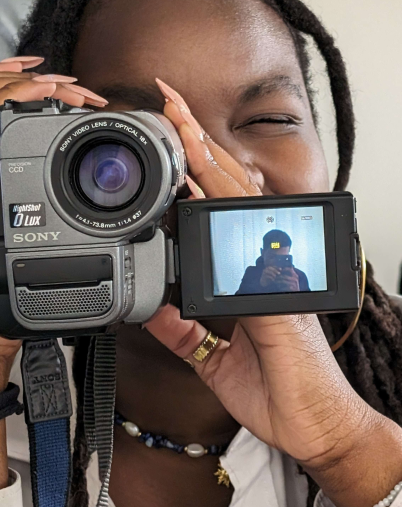
Microaggressions Are Not "Just a Joke"
"Where are you really from?" "You speak so well." "Can I touch your hair?" "You got in here? Oh wow, good for you." These are not compliments. These are not harmless curiosity. These are microaggressions — small moments that communicate, again and again, that you are an outsider in a space that was not originally meant for you.
Individually, any one of these moments might seem dismissible. But they don't exist individually. They stack. They accumulate. And they build into a weight that students who've never experienced them genuinely cannot comprehend. When your energy is going toward processing these moments, it's not going toward your coursework. That's the actual impact.
Where's the Representation Though?
When a student looks to the front of the classroom semester after semester and never sees a professor who shares their background, it sends a message. When every major theorist on the syllabus is a dead white European man with zero acknowledgment that entire intellectual traditions exist outside of that lineage it sends a message. Representation in faculty, in curriculum, in leadership positions on campus these are not nice-to-haves. They are fundamental to every student feeling like their presence is legitimate and valued.
Meritocracy? In This Economy? Respectfully, No.
The idea of meritocracy is genuinely appealing. It sounds like the ultimate girl boss philosophy work hard, be talented, and you'll rise to the top regardless of where you came from. Iconic. Except it's not how it actually works.
Meritocracy as currently practiced in American higher education doesn't measure merit in a vacuum. It measures merit plus opportunity. And then it erases the opportunity part from the equation and calls what's left "natural talent" or "hard work." Students who were given every advantage tutors, elite schools, unpaid prestigious internships their parents funded are called meritorious. Students who achieved remarkable things with a fraction of the resources are called "not quite ready." That's not meritocracy. That's advantage wearing a disguise.
What "Holistic Admissions" Should Actually Mean
Genuinely holistic admissions not just holistic as a marketing buzzword means looking at what a student achieved in the context of what they had access to. A 3.5 GPA maintained while working 20 hours a week, caring for a younger sibling, attending a school with no AP classes, and navigating financial instability tells a more impressive story than a 4.0 earned in a private school with every resource imaginable.
The challenge is accountability. Without clear frameworks and transparency, "holistic" becomes a cover for bias a way for subjective preferences to quietly perpetuate the exact inequalities the process claims to be correcting. So yes to holistic admissions, but with receipts. Show your work.
Real Students, Real Stories: This Hits Different
The statistics are important but behind every number is a real person with a real story. The first-gen Latina student who got into her dream school but couldn't afford the "optional" study abroad program that literally everyone in her major was expected to do. The Black pre-med student who was asked by a peer sincerely, not even meanly if he was there on a sports scholarship. The Indigenous student whose campus cultural center had its funding slashed mid-semester with no explanation.
These aren't rare exceptions or dramatic edge cases. These are patterns. And patterns are design. When the same things keep happening to the same groups of people, that's not coincidence that's architecture.
So What's Actually Being Done?

Race-Neutral Alternatives
Post-ruling, universities are scrambling to find ways to maintain diversity without explicitly considering race. Texas has the "Top 10 Percent Rule" guaranteeing admission to the top graduates from every high school in the state. Because high schools are so residentially segregated, this actually captures diverse students without explicitly mentioning race. Clever? Yes. A complete solution? Not even close.
Other approaches include socioeconomic-based admissions preferences, aggressive outreach and recruitment in underserved communities, pipeline programs for underrepresented students starting in middle school, and eliminating legacy admissions which honestly should have happened years ago.
The Girlies Fighting Back
Listen, the advocacy community has not given up. Far from it. Organizations like the NAACP, UnidosUS, and dozens of grassroots college access nonprofits are working on the ground every day. Student activists are organizing, speaking out, and demanding accountability from their institutions. Legal challenges are being explored. The fight for equitable education didn't end with that Supreme Court ruling it just entered a new and arguably more urgent chapter.
HBCUs and MSIs: The Real Ones
In a post-affirmative action landscape, we genuinely cannot overstate how important HBCUs and Minority-Serving Institutions are. These schools were born out of exclusion and have spent over 150 years being absolute powerhouses of Black intellectual life, leadership, and achievement. HBCUs produce a disproportionate share of Black professionals in STEM, law, medicine, and public service.
Howard. Spelman. Morehouse. Hampton. These are not "alternative" schools or consolation prizes. They are institutions of excellence that provide something predominantly white institutions often can't a campus culture where you are centered, not just tolerated. In this era, their funding and elevation should be a non-negotiable national priority, not an afterthought.
What Universities Need to Do and Like, Yesterday
Universities need to stop treating diversity like it's a vibe they're going for on their Instagram pages and start treating it like the institutional moral responsibility it actually is. Here's what that looks like in practice:
Fully funded financial aid packages not ones that technically exist but leave students with thousands in gaps. Intentional hiring of faculty of color across departments. Curriculum reform that reflects the full breadth of human knowledge and contribution. Campus mental health resources specifically designed for students of color. Transparent admissions processes. Abolishing legacy preferences. Real consequences for microaggressions rather than sensitivity workshops nobody takes seriously.
And most importantly being honest about the gap between admission and inclusion. Because until that gap is closed, acceptance on paper means very little.
Conclusion
At the end of the day, this conversation is about something really fundamental: the right of every student to not just walk through a university's doors but to genuinely thrive once they're inside. Being accepted on paper but excluded by the system is not a small problem or a fringe experience it's a structural reality that shapes the trajectories of millions of students of color in this country.
The work ahead isn't easy and it's not quick. It requires honesty about history, accountability from institutions, advocacy from communities, and honestly a willingness from all of us to sit with discomfort rather than reach for convenient myths like colorblind meritocracy. Every student deserves to feel like they were meant to be there. Not just let in. Not just tolerated. Meant to be there. We have a long way to go, but the conversation? The conversation is just getting started.
